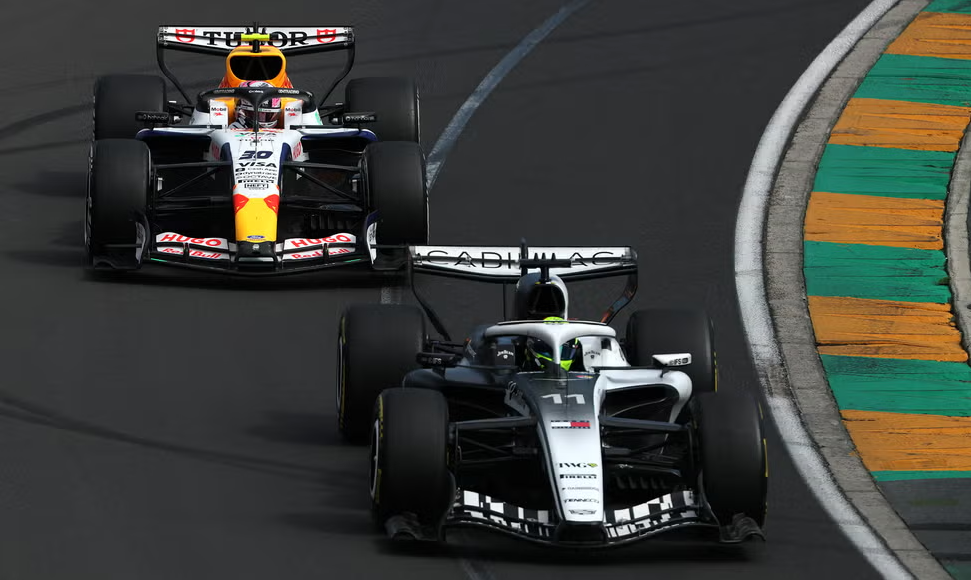
New F1 Starting Procedure Causes Drama at F1 Australian Grand Prix 2023.
The debut of revised starting procedures in Formula 1 leads to a dramatic race at the Australian Grand Prix.
As drivers adapt to new regulations affecting turbo performance.
The introduction of a revamped starting procedure in Formula 1 has created a significant.
Stir during the season-opening Australian Grand Prix, leaving many pilots rattled.
The new regulations, which directly impact turbochargers and the overall mechanics of the cars.
Have already sparked a heated debate among drivers and teams alike, particularly regarding the changes made to the electrical components of the power units.
Main Developments
This weekend marked the debut of the FIA’s latest regulations, which have been the subject of much discussion in the lead-up to the season.
A notable change involves the increased weight of the electrical components in the power unit, which has led to a reduction in top speeds for many cars.
Instead of the typical speeds exceeding 320 km/h, several drivers found themselves struggling to reach as much as 280 km/h or even less.
Raising concerns about the overall performance and competitiveness of the vehicles on the grid.
The first race of the season served as a practical testing ground for these new regulations, with teams and drivers working to adapt to the evolving landscape of Formula 1.
One of the most significant alterations involved the starting procedures, which were implemented for the first time during this race weekend.
The removal of the MGU-K component from the power unit meant that drivers needed to adjust their techniques to achieve optimal turbo performance during the start.
In response to these changes, the FIA decided to introduce a five-second buffer before the lights went out.
Allowing drivers to prepare their new propulsion systems for the race’s start.
The idea was to provide a moment of adjustment, indicated by a blue panel lighting up on the starting bridge.
However, as the day unfolded, it became evident that putting this theory into practice was not as straightforward as anticipated for some competitors.
One of the most alarming moments of the race involved Racing Bulls driver Liam Lawson, who became a central figure in a near-disastrous incident.
As the lights turned off, Lawson found himself virtually stationary on the grid while other drivers, including Franco Colapinto and Sergio Pérez, surged ahead.
This unexpected halt created a precarious situation that could have culminated in a severe collision.
Colapinto, who was positioned directly behind Lawson, recounted the tense moment, expressing relief at narrowly avoiding a major crash.
“We almost had a huge accident with Liam, who was completely stopped on the grid.
Honestly, I was incredibly fortunate to make it through that first lap. It felt very dangerous and quite complicated.
I’m just glad I managed to get through it,” the Alpine driver reflected.
He also admitted to brushing the wall with his rear wheel during the chaotic start but was thankful that it was just a minor incident in an otherwise tense scenario.
Further behind, Sergio Pérez was grappling with the unfamiliarity of his new Cadillac and echoed similar sentiments about the precarious start.
“This Formula 1 is very different from what I was used to, and honestly, I think the highlight of my day was managing to avoid Lawson at the start,” he remarked.
Pérez described the challenging conditions, noting that he had to navigate carefully after following Colapinto’s line when he saw the latter veering toward the wall.
“I couldn’t see what was happening ahead, just watched Franco go off and thought, ‘Something must have happened up there,’ but avoiding the collision was crucial because the speed you reach at the start with these cars is astonishing,” he concluded.
Context
The FIA’s decision to introduce these new regulations stems from a broader effort to enhance the competitive.
Nature of Formula 1 while also addressing concerns related to safety and sustainability.
The modifications to the power units and the starting procedure reflect an ongoing evolution within the sport.
Aimed at keeping pace with technological advancements and the changing dynamics of racing.
In recent months, the Formula 1 community has witnessed a surge of discussions surrounding the implications of these changes.
Drivers have voiced their concerns about the impact of increased weight on electrical systems, which has led to significant performance drops during races.
The shift has not only affected speed but also the overall strategy employed by teams throughout the race weekend.
As teams and drivers continue to adapt to these regulations, the introduction of the new starting procedure creates.
An additional layer of complexity that can significantly influence race outcomes.
The Australian Grand Prix, being the first event of the season, served as a critical test of these changes.
Allowing teams to gather valuable data and insights that will shape their approach in the races to come.
Implications F1 Australian Grand Prix 2023
The incident involving Lawson during the Australian Grand Prix raises various implications for the future of the season.
Firstly, the challenges posed by the new starting procedure highlight the need for drivers to quickly acclimate to the altered mechanics of their vehicles.
With the FIA introducing such significant changes, it is crucial for teams to refine their strategies and ensure their drivers are prepared to handle the new dynamics effectively.
This incident also underscores the importance of safety within the sport.
The potential for collisions during the start of the race emphasizes the need for continued.
Evaluation and adjustment of the regulations to prevent similar occurrences in the future.
As drivers navigate the learning curve associated with the new regulations.
The FIA will likely take a closer look at how these changes are impacting safety and performance on the track.
Moreover, the reactions from drivers like Pérez and Colapinto reveal the psychological aspect of racing under such new conditions.
The pressure to perform while adapting to unfamiliar systems can heighten tensions and lead to potentially dangerous situations.
Teams must balance the need for performance with the imperative of maintaining safety, a dynamic that will be closely monitored throughout the season.
Conclusion
The opening race of the Formula 1 season in Australia has set the stage for what promises to be an exciting yet challenging year ahead.
With the introduction of new regulations and the subsequent starting procedure creating a stir among drivers, it is clear that the landscape of Formula 1 is evolving.
The dramatic incidents during the race serve as a reminder of the inherent risks involved in the sport and the continuous need for adaptation to ensure safety and competitiveness.
As teams and drivers come to terms with these changes.
The upcoming races will undoubtedly provide further insight into how the season unfolds and how effectively the new procedures.
Can be integrated into the high-speed world of Formula 1.