George Russell leads Mercedes’ strong showing at the Bahrain test, while Aston Martin faces reliability concerns. Get expert analysis and full results for F1 2026..
Mercedes Sheds Conservative Stance at the Bahrain Test: George Russell Ascends to P1 as Aston Martin Raises Concerns for 2026 Season
The highly anticipated pre-season **Bahrain test** has provided the initial glimpses into the competitive landscape of the upcoming Formula 1 season, with Mercedes-AMG Petronas F1 Team making a significant statement. After maintaining a notably subdued presence in earlier sessions, the Silver Arrows, spearheaded by George Russell, dramatically shifted their approach, showcasing formidable pace and reliability. This pivotal moment at the **Bahrain test** has ignited discussions across the paddock, particularly regarding the implications for the **Bahrain test 2026** season and beyond.
Mercedes’ Assertive Display and Russell’s Dominance
The concluding day of the initial phase of the **Bahrain test** offered crucial insights, with Mercedes emerging as a prominent force. Their performance unequivocally demonstrated an underlying capability to challenge for top lap times, signaling a departure from their previous, more reserved testing strategy. This change in demeanor from Toto Wolff’s squad indicates a potential shift in their competitive positioning, moving from a low-profile development phase to a more assertive demonstration of their car’s potential.
George Russell’s Stellar Morning Performance
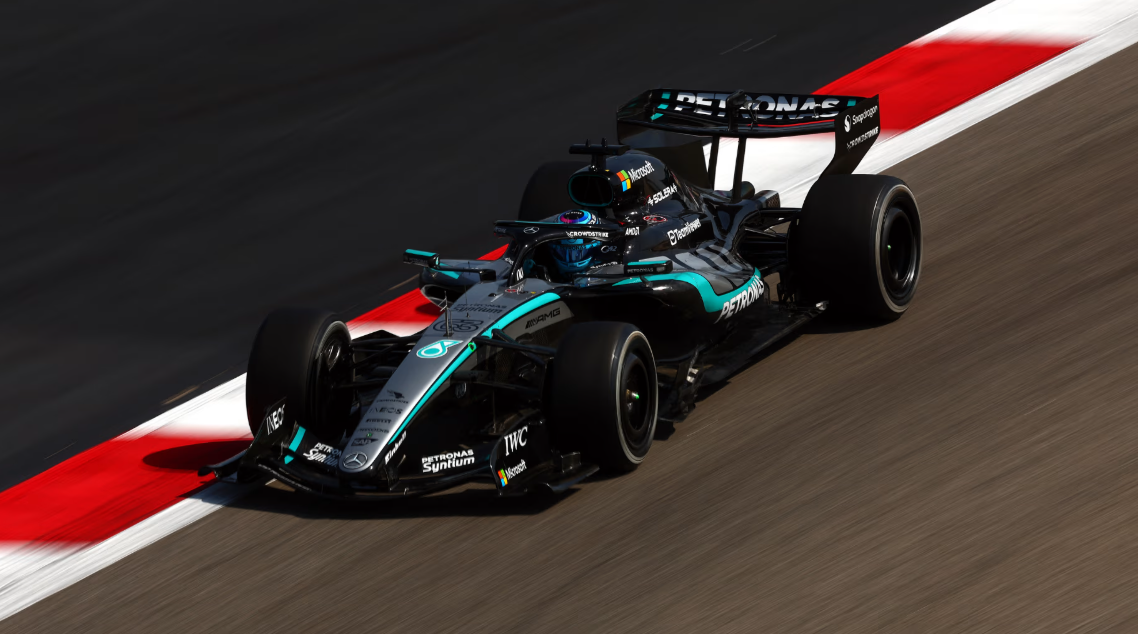
George Russell delivered an exceptional performance during the morning session, navigating the Sakhir circuit with remarkable efficiency and speed. He was the sole driver to breach the formidable 1’33” barrier, setting a blistering lap time of 1’33″918. This achievement not only underscored his individual prowess but also highlighted the raw speed inherent in the Mercedes W17. Furthermore, the car’s robust reliability was strongly affirmed, especially in the wake of Andrea Kimi Antonelli’s technical challenges on the preceding day. Russell’s extensive track time, encompassing numerous long runs and a total of 78 laps, positioned him as the second most active driver of the session, trailing only Liam Lawson’s impressive 84 laps. This high mileage is a critical indicator of the team’s confidence in their new package and their ability to gather substantial data for optimization.
Power Unit Synergy: Mercedes, Alpine, McLaren, and Williams
The Mercedes power unit, developed in Brackley, is a cornerstone for several teams on the grid, and its performance during the **Bahrain test** was under intense scrutiny. McLaren, utilizing the Mercedes engine, saw Oscar Piastri engage in a less spectacular morning in terms of outright lap times, particularly when compared to Lando Norris’s more prominent showings in earlier days. Nevertheless, Piastri’s consistent running, accumulating 72 laps, allowed him to further acclimate to the car, focusing on crucial long-run data and setup refinement rather than headline-grabbing pace.
Alpine’s Resurgence with Franco Colapinto
Franco Colapinto emerged as a significant talking point during Friday’s early running in Bahrain. After a challenging Wednesday session marred by car issues that limited his track time, the Argentine driver was able to unleash more of Alpine’s A526 potential. He ultimately secured the sixth-best time of the day, recording a 1’36″874, and completed a respectable 64 laps. This turnaround suggests that Alpine is making progress in resolving initial teething problems and unlocking performance.
Williams’ Reliability and Carlos Sainz’s Contribution
Williams, another team powered by Mercedes, also demonstrated commendable reliability. Following their unfortunate absence from the crucial Barcelona shakedown, the Grove-based outfit has adopted a proactive strategy to maximize track time. Carlos Sainz, behind the wheel, maintained the positive momentum for the team, confidently executing long runs without incident and accumulating 68 laps. The consistent high activity from all Mercedes-powered cars throughout the **Bahrain test** strongly indicates that the power unit is delivering exceptional dependability, a vital asset for any competitive season, especially looking ahead to the **Bahrain test 2026** where engine regulations will be even more critical.
Aston Martin and Cadillac Grapple with Challenges
While some teams celebrated progress, others faced significant hurdles during the **Bahrain test**. Aston Martin, in particular, found themselves under a cloud of uncertainty, raising questions about their readiness for the upcoming season.
Aston Martin’s Reliability Woes
Lance Stroll voiced a candid critique regarding several deficiencies observed in the AMR26, specifically pointing fingers at the Honda engine and other operational aspects. His initial day of testing was severely curtailed, with only 36 laps completed across both sessions. On Friday, Stroll was again among the least active drivers, managing just 54 laps, ahead of only Valtteri Bottas in termsings of lap count. While Fernando Alonso completed a substantial 98 laps the previous day, his lap times were not particularly noteworthy. The Silverstone-based team clearly has considerable work ahead to enhance their car’s reliability, a primary objective of pre-season testing. This situation is a crucial area for improvement if they aim to be among the **best Bahrain test** performers in future iterations.
Cadillac’s Entry Pains
Cadillac’s foray into Formula 1 is proving to be a steep learning curve, exacerbated by the significant regulatory changes impacting the sport. The American team encountered several issues at the outset of the session. Despite these setbacks, Valtteri Bottas managed to get on track, completing 37 laps, though his recorded time was the slowest of the morning. This highlights the inherent difficulties new entrants face in a highly competitive and technically demanding environment like Formula 1.
Ferrari Engine’s Promising Performance
The Ferrari power unit also generated considerable interest and positive feedback during the **Bahrain test**. The Maranello-based Scuderia made a strong impression on Thursday, with Charles Leclerc leading the day’s proceedings, outperforming his rivals.
Haas’s Unexpected Pace and Ferrari’s Strength
Haas, powered by Ferrari, confirmed that Esteban Ocon’s impressive times on Wednesday were not an anomaly, as Oliver Bearman secured the third-best time on Thursday and the fourth-best on Friday morning with a 1’35″972 over 69 laps. This unexpected turn of speed from Haas has been one of the standout surprises of the **Bahrain test**. On Friday morning, Lewis Hamilton, driving a Ferrari-powered car, came closest to George Russell’s benchmark, clocking a 1’34″209 over 69 laps.
A key takeaway from the testing so far is that, contrary to expectations of increased parity, the new regulations appear to be solidifying the dominance of the top four teams, placing them significantly ahead of the rest of the field. Teams will have another opportunity to refine their packages during the next round of tests scheduled from February 18 to 20. For those seeking a comprehensive **Bahrain test guide**, understanding these early dynamics is crucial.
Results from the Third Day of Bahrain Pre-season Test (Morning Session)
| Pos. | Driver | Time | Delta | Number | Team | Chassis | Engine | Laps |
|---|---|---|---|---|---|---|---|---|
| 1 | George Russell | 1:33″918 | – | 63 | Mercedes | Mercedes | Mercedes | 78 |
| 2 | Lewis Hamilton | 1:34″209 | +00:291 | 44 | Ferrari | Ferrari | Ferrari | 69 |
| 3 | Max Verstappen | 1:35″341 | +01:423 | 3 | Red Bull | Red Bull | RBPT | 61 |
| 4 | Oliver Bearman | 1:35″972 | +02:054 | 87 | Haas | Haas | Ferrari | 69 |
| 5 | Oscar Piastri | 1:36″390 | +02:472 | 81 | McLaren | McLaren | Mercedes | 72 |
| 6 | Franco Colapinto | 1:36″874 | +02:956 | 43 | Alpine | Alpine | Mercedes | 64 |
| 7 | Carlos Sainz | 1:37″186 | +03:268 | 55 | Williams | Williams | Mercedes | 68 |
| 8 | Liam Lawson | 1:37″238 | +03:320 | 30 | Racing Bulls | Racing Bulls | RBPT | 83 |
| 9 | Gabriel Bortoleto | 1:37″536 | +03:618 | 5 | Audi | Audi | Audi | 60 |
| 10 | Lance Stroll | 1:38″423 | +04:505 | 18 | Aston Martin | Aston Martin | Honda | 54 |
| 11 | Valtteri Bottas | 1:38″772 | +04:854 | 77 | Cadillac | Cadillac | Ferrari | 37 |
Datos y Curiosidades
- George Russell was the only driver to achieve a lap time under 1’34”, setting the benchmark at 1’33″918 during the morning session of the Bahrain test.
- Liam Lawson of Racing Bulls completed the highest number of laps in the morning session, with 84 tours, demonstrating exceptional car reliability and data gathering.
- Aston Martin’s Lance Stroll was among the least active drivers on Friday morning, completing only 54 laps, indicating ongoing reliability concerns with the Honda power unit.
- Haas, with Oliver Bearman, emerged as one of the biggest surprises of the Bahrain test, consistently posting competitive times and showing strong performance for a Ferrari-powered customer team.
- Cadillac, as a new entrant, faced typical challenges, with Valtteri Bottas recording the slowest time and fewest laps (37) in the Friday morning session.
Preguntas Frecuentes
What was Mercedes’ strategy shift during the Bahrain test?
Mercedes initially maintained a low-key presence, focusing on data collection rather than outright pace. However, on the final day of the first part of the Bahrain test, they abandoned this conservative approach, with George Russell setting the fastest lap and demonstrating the car’s true potential and reliability.
Why is Aston Martin generating doubts after the Bahrain test?
Aston Martin is raising concerns primarily due to reliability issues with their AMR26, particularly related to the Honda engine. Lance Stroll experienced limited track time on the first day and was among the least active drivers on Friday morning, indicating that the team still has significant work to do to ensure their car’s dependability.
Which power units showed strong reliability during the Bahrain test?
Both the Mercedes and Ferrari power units demonstrated strong reliability. Mercedes-powered teams like Mercedes, McLaren, and Williams completed high lap counts with minimal incidents. Similarly, Ferrari-powered teams, including Ferrari and Haas, also showed robust performance, allowing for extensive data collection.
What are the implications of the new regulations observed during the Bahrain test 2026?
The early observations from the Bahrain test suggest that the new regulations, rather than fostering closer competition, might be widening the performance gap between the top four teams and the rest of the field. Teams like Mercedes, Ferrari, Red Bull, and surprisingly Haas, appear to be significantly ahead, indicating a potential stratification of the grid for the upcoming season.
The initial phase of the **Bahrain test** has certainly set the stage for an intriguing season, with Mercedes making a bold statement and other teams revealing their strengths and weaknesses. As teams head into the next round of testing, the focus will remain on optimizing performance and addressing reliability concerns, all crucial steps in preparing for the competitive challenges of the **Bahrain test 2026** and the championship ahead.
#BahrainTest, #News2026, #CurrentAffairs, #Trends, #Information