Zak Brown, McLaren CEO, expresses concerns over F1 2026 regulations, predicting 2-3 second grid disparities.
Learn about his call for FIA action and early favorites.
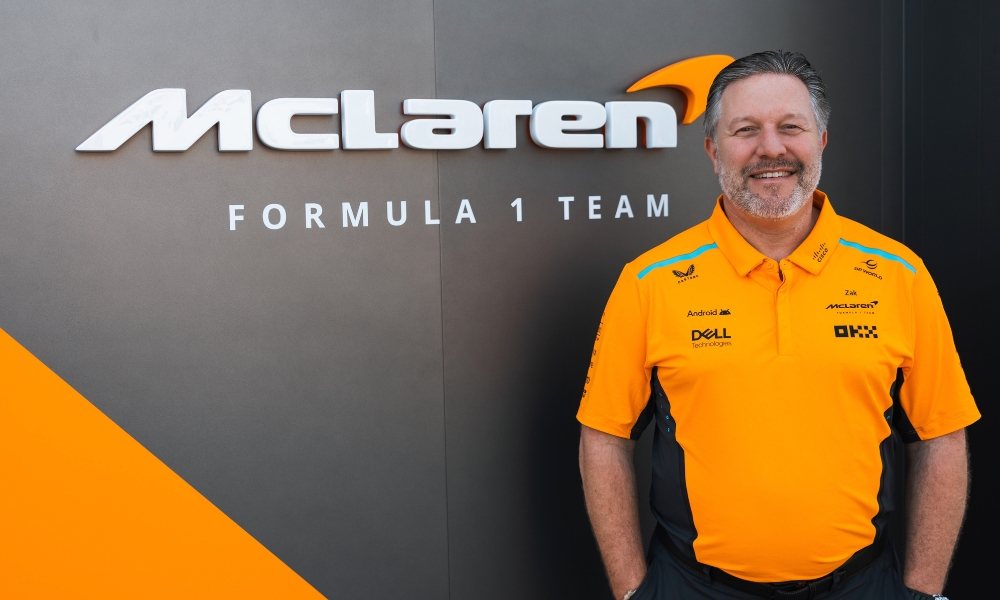
The impending overhaul of Formula 1 regulations in 2026 presents both immense opportunities and significant challenges, a sentiment echoed by McLaren CEO Zak Brown.
He has voiced concerns regarding the potential for substantial performance disparities across the grid.
Suggesting that the initial phase of the new era could see time gaps of two to three seconds between competitors.
This stark warning from Zak Brown underscores the critical work that remains to be done with the FIA to ensure a level playing field and maintain the sport’s competitive integrity.
The Transformative F1 2026 Regulations
The landscape of Formula 1 is poised for a complete transformation with the introduction of the 2026 regulations.
This comprehensive rule change is designed to usher in a new era of racing, compelling every team to essentially start from scratch.
The cars themselves are set to undergo significant modifications, notably becoming smaller in size, which is expected to influence their agility and handling characteristics on track.
Furthermore, the controversial Drag Reduction System (DRS), a staple of modern F1 for aiding overtaking, will be retired, necessitating new approaches to on-track battles.
Perhaps the most profound change lies within the power unit, which will feature a radically different operational philosophy compared to current specifications.
This shift in engine architecture and energy recovery systems means that the performance dynamics from one car to another could be fundamentally altered, creating a fresh slate for all constructors.
Teams are eager to capitalize on this blank canvas, viewing it as a prime opportunity to gain a competitive edge through innovative design and engineering solutions.
McLaren’s Strategic Position Amidst Change
McLaren, building on its strong performance trajectory and aiming for continued success, is keenly focused on leveraging this momentum into the 2026 season.
The Woking-based outfit recognizes that navigating these monumental regulatory shifts will demand precision.
In decision-making and meticulous adjustments during the pre-season development phase.
A pivotal aspect of their strategy revolves around the power unit, which is widely anticipated to be a key differentiator in the new formula.
In this regard, McLaren is set to utilize the Mercedes power unit, a partnership that has already generated considerable anticipation within the paddock and among fans.
The performance and reliability of this engine will be crucial for McLaren’s aspirations to remain at the forefront of the grid as the new regulations take hold.
The team’s ability to seamlessly integrate the new power unit and optimize its chassis to the revised specifications will be paramount in their quest for continued competitiveness.
Zak Brown’s Concerns on Grid Disparity
Zak Brown has openly articulated one of the most significant risks associated with such a sweeping regulatory change:
the potential for a widely dispersed grid. Speaking on David Land’s YouTube channel.
The McLaren chief highlighted his expectation that the initial phase of the 2026 season would see considerable gaps between the cars.
“I think the grid will be more spread out, which is to be expected in a new formula for a while,” Brown stated.
He drew a sharp contrast with the competitive intensity of the previous season, noting that in Abu Dhabi, the entire grid was covered by approximately one second.
For 2026, Brown anticipates a much larger margin, predicting that “two or three seconds will cover the entire grid, but that’s normal.”
This projected increase in performance variance could significantly impact the spectacle of racing.
At least in the early stages, as teams grapple with understanding and optimizing the new technical framework.
The initial period following a major rule change often sees one or two teams finding a dominant solution, leading to less close racing until others catch up.
Driver Adaptation and Regulatory Refinement
Beyond the technical challenges for the teams, the drivers themselves will face a steep learning curve, needing to adapt their driving styles and race management strategies to the new machinery.
Zak Brown emphasized that there is substantial work ahead to ensure the racing remains engaging and fair.
“We’re going to have to learn how to race these cars a little bit differently because they run out of deployment,” he explained.
This refers to the management of the hybrid power unit’s energy deployment, where drivers could potentially exhaust their available electrical power during a race, leading to a significant drop in performance.
Brown believes that continued collaboration with the FIA is essential to fine-tune the rules.
The objective is to strike a delicate balance: allowing for strategic energy management by the drivers while preventing scenarios where cars simply run out of power, which could detract from the racing spectacle.
The goal is to ensure that while strategy plays a role in how battery and energy are utilized.
It doesn’t lead to situations where cars become uncompetitive mid-race due to energy depletion.
Early Predictions and Competitive Landscape
As is customary with new regulations, the true pecking order of the grid will remain an enigma until the cars hit the track for the first competitive session, typically the Australian Grand Prix.
However, Zak Brown offered his preliminary thoughts on which teams are likely to remain at the sharp end of the field.
He expects the traditional “big four” to continue their dominance, albeit with an uncertain hierarchy.
“It looks like the big four are the big four.
It’s hard to know yet in what order (McLaren, Mercedes, Red Bull, and Ferrari),” Brown remarked, highlighting the enduring strength of these established powerhouses.
A particular point of interest and concern for Zak Brown is the performance of Red Bull’s new power unit.
Following their departure from Honda and their new partnership with Ford for engine development, Red Bull has shown impressive early signs.
Brown admitted that Red Bull’s engine was “very powerful” and that “everyone was, let’s say, pleasantly surprised.”
While he would naturally prefer his competitors to be less formidable, Brown expressed admiration for their achievements:
“I’d prefer them not to be so competitive, but I’m impressed with what they’ve done, because they went out, did a lot of kilometers, and seem to be very competitive.”
This early indication of Red Bull’s strength suggests they could once again be a formidable force in the new era.
The Limitations of Early Conclusions
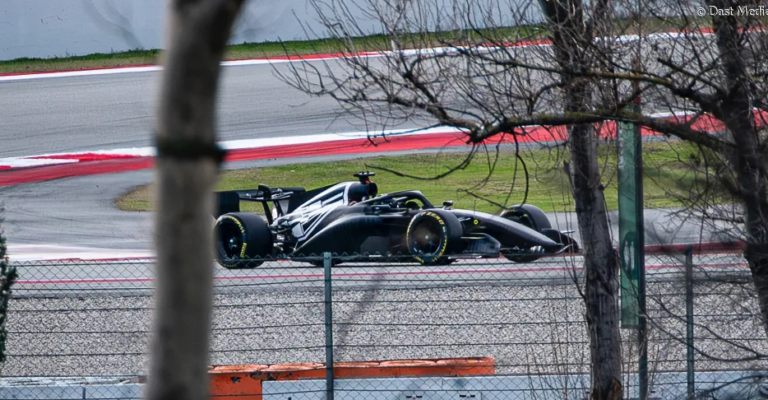
Drawing definitive conclusions from initial testing sessions is notoriously difficult, and the recent tests in Barcelona provided a clear example of this.
Adverse weather conditions in Montmeló meant that teams struggled to gather comprehensive and representative data.
Zak Brown pointed out the challenges faced by some teams, noting, “Williams didn’t manage to get out.
Aston only got out at the end, so you have no idea where Williams is.”
These limited running conditions underscore the need for patience before making any firm judgments about team performance.
The upcoming tests in Bahrain are expected to offer a more precise indication of each team’s potential, with the Australian Grand Prix serving as the ultimate litmus test where the true competitive landscape will begin to unfold.
Despite the prevailing uncertainties, the McLaren boss did reveal an early impression regarding one particular team.
“If you were going to Las Vegas today, I think Mercedes looks like the favorite here right now.
But there’s still a long way to go,” Brown speculated.
Indicating that early observations might place Mercedes in a strong position, though acknowledging the provisional nature of such assessments.
Data and Statistics
Key figures and observations from the original article include:
- The entire Formula 1 grid was covered by approximately one second in the Abu Dhabi Grand Prix of the previous season.
- Zak Brown anticipates that the 2026 regulations could lead to a grid spread of two to three seconds initially.
- The “big four” teams expected to remain competitive are McLaren, Mercedes, Red Bull, and Ferrari.
As Formula 1 hurtles towards its 2026 transformation, the insights from Zak Brown serve as a crucial reminder of the complexities and potential pitfalls that lie ahead.
His warnings about initial grid disparities and the need for ongoing collaboration with the FIA highlight the delicate balance required to maintain the sport’s thrilling competitive edge.
While the promise of new regulations brings excitement and innovation, the path to a truly balanced and captivating era will depend heavily on the refinement of rules and the strategic acumen of teams like McLaren.
The journey to 2026 is one of anticipation, challenge, and the unwavering pursuit of excellence, with Zak Brown at the forefront of those advocating for a robust and fair future for Grand Prix racing.
Frequently Asked Questions
¿What are Zak Brown’s main concerns for F1 2026?
Zak Brown’s primary concerns for the 2026 Formula 1 season revolve around the potential for significant performance disparities among teams, predicting that the grid could spread by two to three seconds initially.
He also emphasizes the critical need for the FIA to refine rules concerning power unit deployment to ensure fair and strategic racing.
¿How will the 2026 regulations impact F1 cars?
The 2026 regulations will bring about substantial changes to F1 cars. They will be smaller in size, the Drag Reduction System (DRS) will be removed, and the power unit operation will undergo a complete overhaul.
These modifications will require extensive adaptation from teams in terms of design and engineering, and from drivers in terms of racing strategy and energy management.
F1 2026 regulations, McLaren, FIA, grid disparity, power unit, Mercedes engine, Red Bull Ford, F1 risks, driver adaptation, pre-season testing