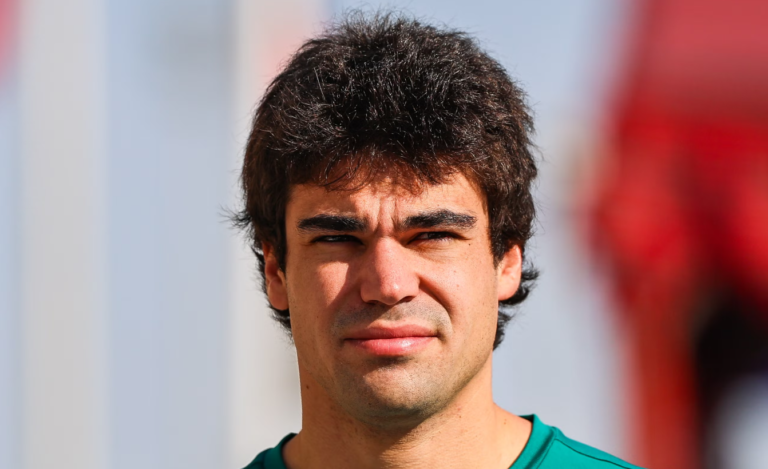
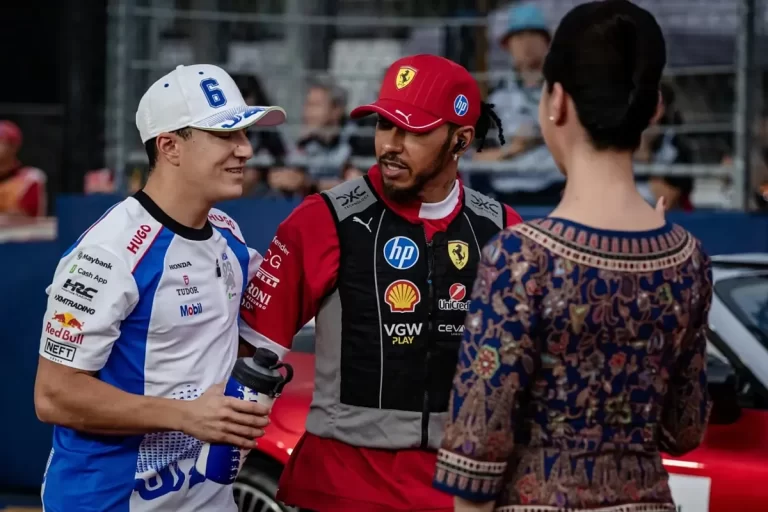
Carlos Sainz shares his strong opinions on the F1 2026 regulations, emphasizing driver-management, new terminology, and his role as Madring circuit ambassador.
Sainz’s Bold Outlook on F1 2026: A Driver’s Pledge to Challenge the Status Quo
The landscape of Formula 1 is on the cusp of a monumental transformation with the impending 2026 regulations, and a prominent voice in the paddock, Carlos Sainz.
Has articulated his readiness to actively engage with the sport’s governing bodies if the forthcoming changes do not align with his vision for competitive racing.
This proactive stance from Sainz underscores a critical period for the sport, as drivers, teams.
And fans alike grapple with the implications of a new technical era.
The Spanish driver’s comments highlight a potential shift in the driver’s role.
Remphasizing strategic acumen as much as raw speed, a characteristic that could define the best Sainz in this evolving environment.
Navigating the Intricacies of F1 2026: A New Era of Driver-Management
Carlos Sainz recently offered a candid assessment of the Formula 1 2026 regulations, describing the upcoming changes as akin to receiving an entirely new instruction manual for the sport.
His remarks, made during an event with his sponsor Estrella Galicia 0’0 in Madrid, painted a picture of a future where drivers will increasingly become “race managers” rather than solely relying on innate talent.
This perspective from Sainz, a driver known for his analytical approach, suggests a profound shift in the demands placed upon competitors.
The official unveiling of the 2026 Formula 1 season is slated for the Australian Grand Prix on March 8th, a date eagerly anticipated to clarify many uncertainties surrounding the new technical directives.
Sainz humorously noted his lack of a university degree, yet affirmed his academic qualification, implying that the intellectual demands of the new F1 will be substantial.
This era, he suggests, will prioritize ingenuity and strategic thinking, with the internal combustion engine’s role diminishing in favor of increased electrification.
Mastering this “new and controversial era” will necessitate a thorough understanding of the revised operational guidelines.
Making a comprehensive Sainz guide to these changes invaluable for aspiring drivers and enthusiasts.
The Lexicon of Tomorrow’s Racing: Decoding F1 2026 Terminology
The complexity of the 2026 Formula 1 season extends beyond mere technical specifications, introducing a new vocabulary that even seasoned participants will need to master.
Terms such as “Straight Mode,” “Overtake Mode,” “Boost Mode,” “Clipping,” and “Lift & Coast” are set to become commonplace, demanding a steep learning curve for everyone involved.
Sainz himself admitted, “Many times, even we don’t understand it,” highlighting the intricate nature of the forthcoming regulations.
This new lexicon is not just jargon; it represents fundamental changes to how power is deployed and managed during a race.
The quantitative leap, or perhaps a step backward depending on one’s viewpoint, in F1 2026 is significant.
The removal of the MGU-H (Motor Generator Unit – Heat) and the substantial increase in electrical power will fundamentally alter race dynamics.
This change is expected to redefine strategies that have been honed over decades.
From an expert opinion standpoint, the MGU-H’s absence means teams will lose a highly efficient energy recovery system from exhaust gases.
Forcing a greater reliance on the MGU-K (Motor Generator Unit – Kinetic) and potentially larger battery packs.
This shift will inevitably lead to more complex energy management strategies throughout a race.
Requiring drivers to constantly monitor and adjust their power deployment.
Sainz anticipates that it will take approximately four to five races into the new season before the true impact and value of these regulatory changes can be properly assessed.
He has also made it clear that he will not hesitate to voice his concerns to the FIA (Fédération Internationale de l’Automobile) if the new format proves unsatisfactory.
“If I don’t like what I see, I will be the first from the GPDA [Grand Prix Drivers’ Association] to speak with Ben Sulayem or Domenicali.
And if I have to go hand in hand with Max [Verstappen], I will,” Sainz asserted, signaling a united front among drivers if necessary.
This demonstrates a strong leadership quality in Sainz, indicating his commitment to the sport’s integrity and entertainment value.
The Evolving Role of the Driver: More Manager, Less Pure Talent?
The 2026 regulations are poised to elevate the role of the race engineer to an unprecedented level, with their directives becoming crucial for a driver’s performance.
Engineers will be tasked with guiding their drivers on precisely when to extract maximum performance from the car and when to regenerate battery power via the MGU-K.
Sainz acknowledged this shift, stating, “We are going to be managers, but we already were before.”
He defended the Federation, recalling that similar concerns were raised in 2014 regarding new regulations, yet “in the end, the races were fun. We have gotten used to it 12 years later.”
Despite a prevailing sense of pessimism surrounding the new rules, the 31-year-old driver believes his particular skill set as a “driver-manager” could prove advantageous.
“Everything that involves thinking about the car has always come naturally to me,” Sainz explained, suggesting that his analytical mind and methodical approach could make him one of the best Sainz contenders in this new era.
However, he also expressed a desire not to be pigeonholed as merely a “worker driver,” emphasizing that “it’s not all work; it’s also talent.”
This highlights the delicate balance between strategic execution and innate driving ability that will be crucial for success in 2026.
The Art of the Start: A Game-Changer in F1 2026
The upcoming Formula 1 season will also bring about significant changes to race starts, which Carlos Sainz believes will no longer be as inherently dangerous as they once were.
Observations from pre-season testing in Bahrain already indicated how the Ferrari power unit gained a substantial advantage through extensive turbo preparation during start procedures, leaving competitors several meters behind.
Sainz pointed out, “The start is going to make more of a difference.”
He elaborated, “Before, the maximum difference was 4 or 5 meters from 0 to 100 km/h.
But this year, there could be 15 or 20 meters, which could add up to 3 or 4 positions.”
Tactical analysis suggests that “super starts” could become a defining feature of races at venues like Albert Park, potentially shaking up the grid order significantly in the opening moments.
This increased emphasis on the start procedure means that teams will dedicate even more resources to optimizing this crucial phase.
A practical guide for drivers in 2026 would undoubtedly include extensive practice with new clutch settings, engine maps, and energy deployment strategies specifically for the start.
The ability to consistently execute a perfect start could be a key differentiator, rewarding teams that master the new technology and penalizing those that struggle.
This could also lead to more dramatic early race overtakes and position changes, enhancing the spectacle for fans.
Sainz’s Perspective on the Madring Circuit: A Home Race Dream
It comes as no surprise that Carlos Sainz has been appointed the official ambassador for the Comunidad de Madrid’s new circuit, Madring, which is currently under construction.
This urban circuit is scheduled to make its Formula 1 debut on September 13, 2026.
Provided construction timelines are met and with the unwavering support of regional president Isabel Díaz Ayuso and mayor José Luis Martínez-Almeida.
The introduction of Madring signifies a significant development for Spanish motorsport and for Sainz personally.
The decision to host a new urban circuit in the Spanish capital necessitates a “displacement” of the Barcelona Grand Prix to a rotating calendar.
Sharing its spot with iconic tracks like Spa-Francorchamps to maintain its presence in the F1 calendar.
This move has drawn considerable criticism from many fans, who recall the unfortunate demise of Valencia’s urban circuit after 2012.
However, Sainz prefers to adopt a cautious approach before offering a definitive opinion.
“I like to wait and evaluate. Formula 1 brings many good things (local business, etc.).
I will always support a race in Madrid,” the Madrid-born driver affirmed.
When questioned about the possibility of winning his home Grand Prix with a Williams FW48.
A car that has shown performance deficiencies, Sainz remained pragmatic yet hopeful: “Dreaming is free, but there are many races and much development left.”
This statement reflects his realistic understanding of the challenges ahead while still harboring the ambition to achieve success on home soil.
The prospect of a home race for Sainz in 2026 adds another layer of excitement to his future in the sport, potentially offering a career highlight for the talented driver.
Facts and Curiosities
- Carlos Sainz humorously noted his lack of a university degree, but confirmed he passed his “selectividad” (university entrance exams), implying the intellectual demands of F1 2026.
- The new F1 2026 regulations will introduce complex terminology such as “Straight Mode,” “Overtake Mode,” “Boost Mode,” “Clipping,” and “Lift & Coast.”
- Sainz expects it will take between four and five races into the 2026 season to properly evaluate the impact of the new regulations.
- The Madring urban circuit in Madrid is scheduled to debut in Formula 1 on September 13, 2026.
- Sainz believes the difference made at the start of a race could increase from 4-5 meters to 15-20 meters, potentially gaining 3-4 positions.
Frequently Asked Questions
What are Carlos Sainz’s primary concerns regarding the F1 2026 regulations?
Carlos Sainz’s main concern revolves around the potential impact of the new regulations on the racing spectacle.
He has expressed that if the changes, particularly the increased complexity and emphasis on energy management, do not lead to enjoyable and competitive races, he will be vocal in his criticism and will engage with the FIA to advocate for improvements.
His willingness to collaborate with other drivers like Max Verstappen highlights a collective concern for the sport’s future.
How will the new regulations transform a Formula 1 driver’s role, according to Sainz?
Sainz believes the 2026 regulations will significantly transform a driver’s role, making them more akin to “race managers.”
This means drivers will need to focus heavily on strategic thinking, energy recovery, and power deployment throughout the race, guided closely by their engineers.
While acknowledging that drivers have always had a management aspect, the new rules, with the removal of the MGU-H and increased electrical power, will amplify this role, demanding a blend of talent and meticulous car management.
What is Sainz’s opinion on the new Madring circuit in Madrid?
Carlos Sainz is supportive of the new Madring urban circuit in Madrid, especially given his role as its official ambassador.
He views the Formula 1 race in his home city as a positive development, bringing numerous benefits, including local business opportunities.
While he prefers to reserve full judgment until the circuit is operational, he has consistently stated his backing for a Grand Prix in Madrid, despite the controversy surrounding Barcelona’s potential displacement from the calendar.
How will race starts be affected by the F1 2026 rules, based on Sainz’s observations?
According to Sainz, the 2026 regulations will make race starts even more critical and impactful.
He noted that pre-season testing indicated a significant increase in the potential distance gained or lost at the start, from a previous 4-5 meters to potentially 15-20 meters.
This could translate to a gain or loss of 3-4 positions on the grid, making the initial moments of a race a major differentiator and a key area for strategic advantage.
The evolving landscape of Formula 1 in 2026 presents both challenges and opportunities, and Carlos Sainz stands ready to embrace them.
His analytical mind and commitment to the sport’s integrity position him as a key figure in shaping the future of racing.
Whether it’s mastering the new technical lexicon, adapting to the “manager-driver” role.
Or competing for a dream victory at Madring, Sainz’s journey through this transformative era will undoubtedly be one to watch.