Discover Fred Vasseur’s strategic silence for Ferrari F1 in 2026 pre-season. Learn how he avoids the “winter champion” trap amidst Mercedes and Red Bull buzz.
Fred Vasseur’s Calculated Quiet: Ferrari F1 Boss Shuns Limelight as Mercedes, Red Bull, and McLaren Dominate Pre-Season Chatter
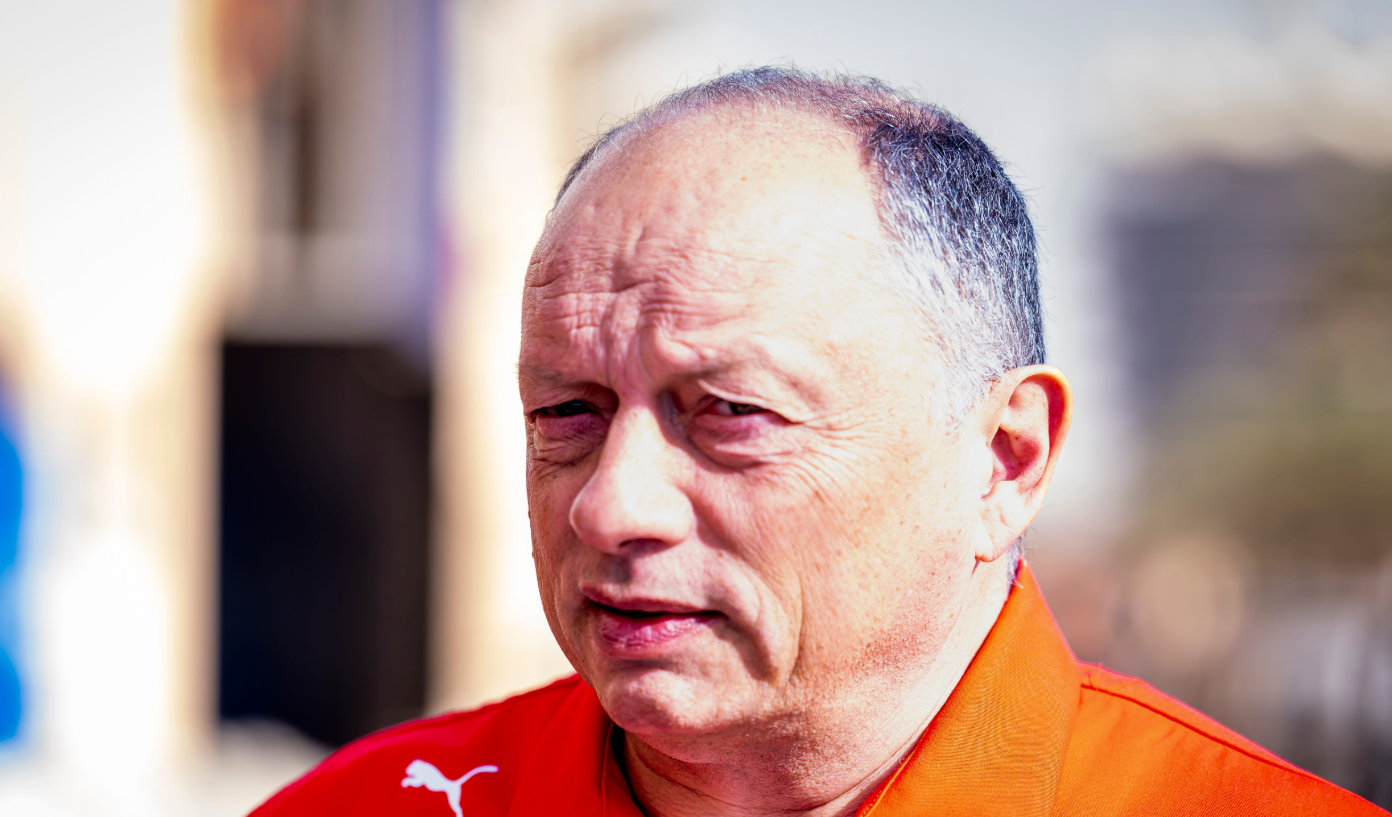
In the high-octane world of Formula 1, where every whisper can turn into a roar, Fred Vasseur, the esteemed team principal of Ferrari F1, has chosen a path of deliberate quietude.
As rival teams like Mercedes, Red Bull, and McLaren capture the bulk of pre-season discussions, Vasseur’s strategic decision to keep Ferrari out of the spotlight is a fascinating tactical move.
This approach, central to the philosophy of Fred Vasseur, aims to foster an environment of intense internal focus, allowing the Scuderia to meticulously refine their challenger away from external pressures and speculative narratives.
The Pre-Season Landscape: A Whirlwind of Speculation and Controversy
The current pre-season period has generated considerable buzz, largely fueled by the introduction of fresh technical regulations and the varied perspectives among drivers regarding the performance characteristics of their new single-seaters. Adding to the intrigue is the ongoing controversy surrounding Mercedes’ power unit, which continues to be a hot topic of discussion within the paddock and among fans alike. This dynamic backdrop sets the stage for what promises to be an enthralling 2026 season, with Fred Vasseur navigating Ferrari through these turbulent waters.
Mercedes: The Reigning Enigma
For the German outfit, Mercedes, speculation has been rife since the previous season that their new challenger would emerge as the dominant car for the upcoming year.
High expectations surrounded them, with many anticipating a confirmation of these rumors during testing.
Furthermore, the contentious issue of their engine compressor remains unresolved, with uncertainty lingering over its fate and the ultimate ruling from the FIA.
This particular controversy has undoubtedly injected significant energy into the pre-season narrative.
As things stand, early indications suggest that the W17 chassis is currently performing as the leading contender.
The focus on Mercedes, both for its perceived strength and its technical challenges, inadvertently draws attention away from other teams, a situation Fred Vasseur openly welcomes.
Red Bull’s Resurgence and the Ford Partnership
Red Bull, on the other hand, entered the pre-season with considerable anticipation surrounding their fresh partnership with Ford. Initial concerns were raised about the viability of this new project, with some suggesting the Austrian team might experience a dip in performance. Yet, their displays from the Barcelona tests through to Bahrain have astonished observers, showcasing impressive capabilities that have firmly re-established Max Verstappen as a prime contender for the world championship. This strong showing is a testament to the team’s engineering prowess and could be a key factor in the Fred Vasseur 2026 championship battle, as Ferrari will undoubtedly be measuring themselves against Red Bull’s pace.
Aston Martin’s Early Struggles
Conversely, Aston Martin has faced a less favorable start, with emerging reports casting a shadow of doubt over their prospects. Many analysts are already positioning them towards the back of the grid. Despite it being merely the pre-season, a palpable sense of disappointment and concern is evident within the team’s ranks. Their public struggles only serve to amplify the quiet confidence emanating from the Ferrari garage, a stark contrast that highlights the effectiveness of Fred Vasseur’s strategy.
Ferrari’s Stealthy Ascent Under Fred Vasseur
Amidst this varied landscape, one team has certainly not gone unnoticed, yet surprisingly little fanfare surrounds them: Ferrari. The Italian squad has consistently demonstrated strong form throughout the pre-season, executing successful simulations and showcasing promising performance metrics. These displays have quietly positioned them as a dark horse, a potential candidate for the upcoming title, a scenario that surely pleases Fred Vasseur. The absence of intense media scrutiny allows Ferrari to operate with a degree of freedom that their rivals might envy, a strategic advantage cultivated by the leadership of Fred Vasseur.
Fred Vasseur’s Strategic Silence: A Masterclass in Focus
This relative anonymity has been met with approval by Fred Vasseur, Ferrari’s team principal.
He conveyed to the media that maintaining a low profile is inherently beneficial, as it allows the team to channel all its energy into refining and enhancing their car. Vasseur articulated his perspective, stating,
“The truly advantageous aspect is that we are not the subject of widespread discussion.
I find this particular circumstance quite favorable.
It enables a complete internal focus. The true pecking order remains unknown to everyone. The actual strength of Mercedes is still a mystery.
No one can ascertain whether a team is running with an additional 20, 40, or even 60 kilograms of fuel, which represents a far greater variable than the inherent differences between the cars themselves.
Therefore, the most effective approach is to remain silent and dedicate all efforts to our own development.”
This statement offers a profound insight into the strategic thinking of Fred Vasseur, highlighting his belief in the power of introspection over external validation during critical development phases. This is a key element of the guide Fred Vasseur provides for team management.
Deep Dive into Vasseur’s Tactical Acumen
Fred Vasseur’s decision to embrace silence is not merely a preference but a calculated tactical maneuver. In the frenzied environment of Formula 1 pre-season, where every lap time is dissected and every comment amplified, the pressure on teams can be immense. By deflecting attention, Vasseur shields his engineers and drivers from external noise, allowing them to concentrate solely on data analysis, problem-solving, and optimizing the car’s performance.
This approach minimizes the risk of complacency that can arise from early praise or demoralization from undue criticism. It fosters a culture where the team’s internal metrics and objectives take precedence over public perception.
This could be regarded as one of the best Fred Vasseur decisions in recent memory, emphasizing substance over showmanship.
The contrast with Mercedes, embroiled in engine controversy, and Aston Martin, facing early doubts, is striking.
While these teams grapple with public narratives, Ferrari, under Fred Vasseur, can quietly chip away at performance gains.
The unknown variables Vasseur mentions—fuel loads, engine modes, and test programs—are precisely why pre-season times are unreliable.
By acknowledging this, he empowers his team to ignore the superficial headlines and focus on the genuine task of understanding their SF-26.
This strategic foresight is a hallmark of effective leadership and a crucial guide Fred Vasseur offers to aspiring team principals.
The “Winter Champion” Trap: A Guide to Pre-Season Realities
A fundamental principle to grasp about pre-season testing is that the observed results are often deceptive.
It is crucial to interpret all information conveyed during these test days with a significant degree of caution. Every team deliberately conceals its true performance, engaging in extensive trial-and-error procedures.
Their primary objective isn’t to achieve outright speed but rather to gain a comprehensive understanding of their new car’s behavior and characteristics.
This phenomenon frequently leads to midfield teams appearing at the sharp end of the grid, as exemplified this year by Haas, which has consistently featured among the top positions.
However, it appears this crucial lesson has historically eluded Ferrari.
The Italian squad consistently performs strongly during the pre-season, frequently securing podium positions and often topping the time sheets. This creates an inflated perception of their capabilities, which often proves to be an illusion.
Once the actual racing season commences, Ferrari’s initial promise tends to dissipate.
When the first Grand Prix arrives and all teams reveal their true pace, Ferrari often finds itself a step behind.
A stark reminder of this pattern was the 2019 season, where they dominated pre-season testing with undeniable authority, only to finish the Australian Grand Prix in a disappointing fourth and fifth place, respectively.
This placed them significantly adrift of the front-runners and Mercedes, who would go on to command the world championship that year.
This historical context provides valuable insights into the challenges faced by Fred Vasseur and his team, as they strive to break this cycle and deliver consistent performance throughout the Fred Vasseur 2026 season.
Breaking the Cycle: Fred Vasseur’s Vision for 2026
For Fred Vasseur, the “winter champion” curse is not just a historical anecdote but a critical challenge to overcome.
His current strategy of silence is a direct counter to this tendency. By downplaying expectations and emphasizing internal focus, he is attempting to instill a more grounded and realistic approach within the team.
The goal for Fred Vasseur 2026 is not to win pre-season headlines, but to build a robust, competitive package that performs consistently when it truly matters.
This long-term vision, prioritizing genuine development over fleeting glory, is what distinguishes the best Fred Vasseur leadership moments.
It’s a practical guide Fred Vasseur is implementing to ensure Ferrari’s resurgence is sustainable. The tactical implications extend beyond mere media management.
By not showing their full hand, Ferrari keeps rivals guessing about their true pace and development direction.
This can lead to competitors overreacting to their own perceived shortcomings or misinterpreting Ferrari’s potential.
In a sport as strategically complex as Formula 1, such psychological warfare can be as crucial as aerodynamic efficiency.
Fred Vasseur understands that the true measure of success lies in the championship standings, not in the pre-season time sheets.
His tenure at Ferrari is increasingly defined by these astute, often understated, strategic decisions.
Facts and Curiosities
- During this pre-season, a total of eleven teams are participating in testing.
- Mercedes’ W17 car is currently perceived as the best performing vehicle based on early pre-season observations.
- Red Bull has formed a new partnership with Ford, which initially raised questions about their project’s performance.
- Historically, Ferrari has often shown strong performance during pre-season testing, frequently topping the time sheets, only for their form to diminish once the actual racing season begins.
- In 2019, Ferrari led the pre-season testing with authority but finished the opening Australian Grand Prix in fourth and fifth positions, significantly behind Mercedes, who went on to dominate that year’s championship.
What is Fred Vasseur’s current strategy for Ferrari during pre-season?
Fred Vasseur is intentionally keeping Ferrari out of the media spotlight during pre-season testing.
He believes that this strategic silence allows the team to focus solely on car development and improvement without external pressure, premature expectations, or the distraction of rival teams’ performances.
Why does Fred Vasseur prefer Ferrari to remain quiet during pre-season testing?
Vasseur believes that when other teams are the subject of discussion, Ferrari can concentrate on themselves.
He highlighted that nobody truly knows the fuel loads (e.g., 20, 40, or 60 kilograms) or the real performance capabilities of competitors, making self-focus the most effective approach for genuine progress. This is a core tenet of the guide Fred Vasseur employs for team management.
What is the “winter champion” phenomenon in F1 pre-season, and how does it relate to Ferrari?
The “winter champion” phenomenon refers to teams that perform exceptionally well in pre-season testing, often leading the time sheets, but then fail to replicate that dominant form in the actual racing season.
Ferrari has a historical pattern of being strong in pre-season, only for their performance to decline once the competitive season begins, as vividly illustrated by their 2019 season performance.
How does Fred Vasseur’s strategy aim to impact Ferrari’s performance in 2026?
Fred Vasseur’s strategy for the Fred Vasseur 2026 season is designed to break Ferrari’s historical “winter champion” cycle.
By fostering an environment of internal focus and downplaying external expectations, he aims to build a more consistent and genuinely competitive car that performs optimally throughout the entire championship, rather than just in pre-season tests. This long-term, results-oriented approach is considered one of the best Fred Vasseur tactical decisions.