Discover the future of GP de Catalunya in F1! Montmeló secures its spot until 2032, alternating with Belgium. Get key insights, 2026 details & more.
Formula 1’s Future Secured: GP de Catalunya Confirmed on Calendar Alongside Belgium – Key Insights and the Road Ahead
Exciting developments have emerged from the world of Formula 1, bringing clarity to the future of one of its most cherished venues.
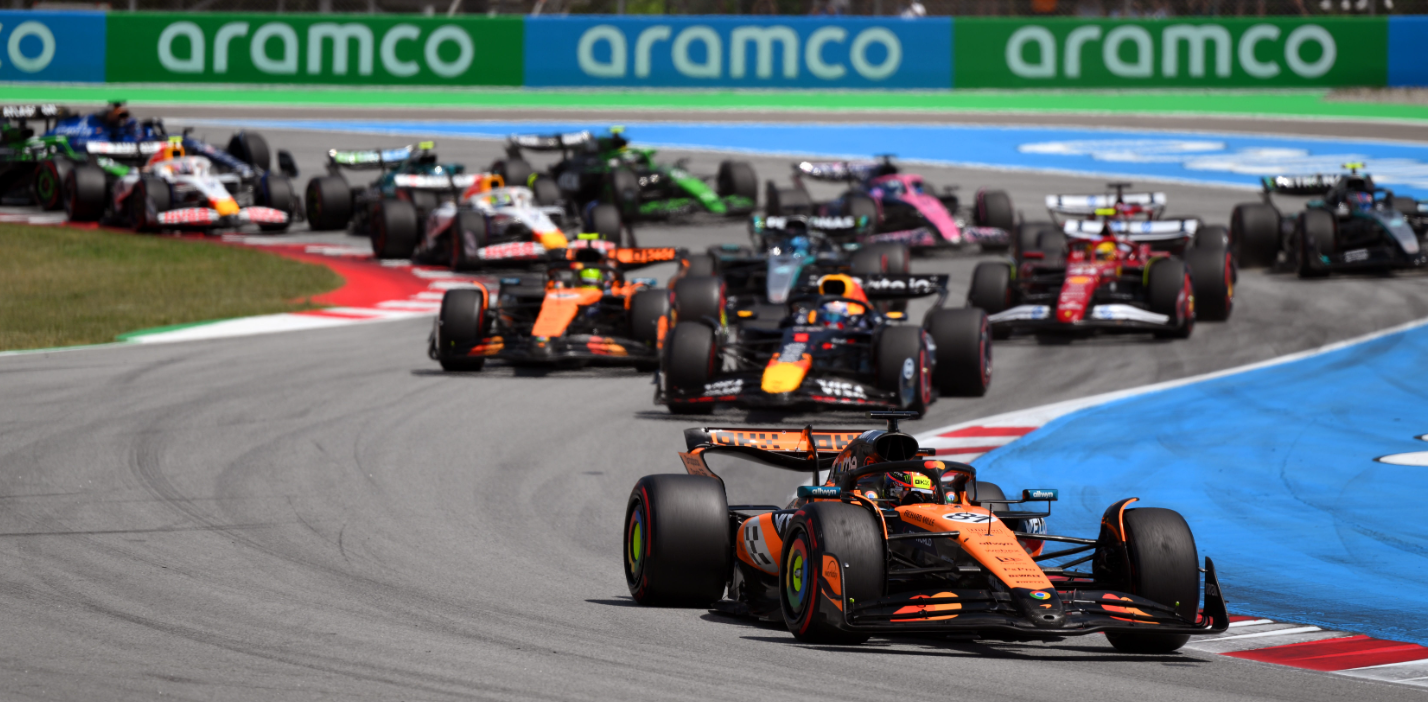
The Circuit de Barcelona-Catalunya, home to the iconic GP de Catalunya, has officially secured its place on the Formula 1 calendar until 2032.
This significant announcement, which also involves an alternating schedule with the Belgian Grand Prix
Marks a pivotal moment for the sport and its fans, particularly those eager to experience the thrill of the GP de Catalunya.
The Road to Renewal: Addressing Uncertainty in Formula 1’s Landscape
For several months, the Formula 1 community was gripped by considerable uncertainty regarding the long-term presence of certain traditional circuits.
Following a series of contract extensions for other prominent venues such as Australia, Las Vegas, Portugal, and Mexico, questions arose about the Circuit de Barcelona-Catalunya’s ability to maintain its slot.
This apprehension was further amplified by the official confirmation of the GP de Madrid joining the calendar until 2035, coupled with remarks from F1 CEO Stefano Domenicali, who had previously indicated the complexities of hosting two Grands Prix within the same nation.
Despite these challenges, the organizers behind the GP de Catalunya remained steadfast in their efforts.
Barcelona’s commitment to enhancing its facilities was a continuous endeavor, driven by the ambition to uphold its status as a premier location for a Formula 1 Grand Prix.
In an era where hosting an F1 event is increasingly competitive and highly sought after, these proactive measures proved instrumental.
The strategic upgrades and the introduction of new, luxurious VIP areas were particularly noteworthy.
These improvements align perfectly with Formula 1’s broader objective of broadening its appeal and drawing in a more diverse audience, including high-profile individuals from outside the traditional motorsport sphere.
This focus on an enriched spectator experience was undoubtedly a key factor in securing the circuit’s renewed contract, ensuring that the GP de Catalunya remains a highlight for years to come.
Barcelona’s Strategic Enhancements and Modern F1 Appeal
The decision to retain the Circuit de Barcelona-Catalunya on the Formula 1 calendar was not made lightly.
Industry experts widely acknowledge that Barcelona’s proactive investment in its infrastructure played a decisive role.
The circuit undertook substantial renovations, with a particular emphasis on modernizing its hospitality offerings.
The implementation of state-of-the-art VIP areas, for instance, reflects a growing trend within Formula 1 to cater to a more diverse and affluent demographic.
This strategic move aims to transform race weekends into comprehensive entertainment spectacles, attracting not just hardcore racing enthusiasts but also celebrities, business leaders, and luxury travelers.
From an expert perspective, this focus on premium experiences is a shrewd business strategy.
Modern Formula 1 is as much about the spectacle and the lifestyle as it is about the racing itself.
Circuits that can offer unparalleled fan engagement, luxurious amenities, and a vibrant atmosphere outside the track are increasingly valued.
The Circuit de Barcelona-Catalunya, by investing in these areas, demonstrated its understanding of F1’s evolving commercial model.
This commitment to enhancing the overall event experience ensures that the GP de Catalunya continues to be seen as a top-tier destination
Capable of delivering both thrilling on-track action and world-class off-track entertainment.
This forward-thinking approach is crucial for any venue aiming to be among the mejores GP de Catalunya in the long run.
The Alternating Calendar: A New Era for European Classics
While the renewal of the GP de Catalunya is cause for celebration, it comes with a significant caveat that had been a subject of speculation for months.
The Circuit de Barcelona-Catalunya will not feature annually on the calendar but will instead alternate its slot with another beloved European circuit: Spa-Francorchamps in Belgium.
This alternating model is a direct consequence of Formula 1’s aggressive expansion into new markets, with recent additions like Qatar, Las Vegas, and Miami intensifying the competition for calendar spots.
Many drivers and fans consider Spa-Francorchamps an indispensable part of the F1 season due to its challenging and historic layout, making this shared arrangement a pragmatic solution to accommodate both traditional venues and new lucrative races.
Under this new agreement, the GP de Catalunya will host its event in even-numbered years until 2032.
Specifically, Barcelona is slated to welcome Formula 1 in 2028, 2030, and 2032. Conversely, Spa-Francorchamps will take its turn in the odd-numbered years: 2027, 2029, and 2031.
This innovative scheduling approach allows Formula 1
To maintain its presence at two highly regarded European tracks while also making room for its global expansion strategy.
Stefano Domenicali, CEO of Formula 1, expressed his enthusiasm for the arrangement, emphasizing Barcelona’s suitability as a host city for such a prestigious event.
“The team has invested significantly in the Circuit and has organized fantastic festivals for the fans in recent years, and we look forward to seeing them continue to develop the experience, both for race attendees and for the city as a whole,” Domenicali stated. He further added, “Barcelona is an incredible city, and Formula 1 fans always welcome us with great passion, so I am delighted that we will continue to compete at the Circuit de Barcelona-Catalunya for many more years.”
Pol Gibert, the Secretary General for Business and Labor of the Generalitat, echoed these sentiments, expressing gratitude for the continued trust placed in the Circuit de Barcelona-Catalunya and the region. “We celebrate the renewal of the Formula 1 Grand Prix in Catalunya, at least until 2032, and we appreciate the confidence placed in the Circuit de Barcelona-Catalunya and the country throughout all these years,” Gibert remarked.
Tactical Implications of an Alternating Calendar
The alternating calendar model for the GP de Catalunya and Spa-Francorchamps presents a fascinating tactical challenge for teams and a unique experience for fans. For teams, this means adapting their car development cycles and logistical planning. A circuit like Montmeló, with its diverse range of corners and long main straight, is often used as a benchmark for aerodynamic efficiency and tire management. Not having it every year could slightly alter the data collection strategies, especially for teams that rely heavily on its characteristics for mid-season upgrades validation. However, it also means that when the GP de Catalunya does appear on the calendar, it will be a highly anticipated event, potentially leading to more focused development efforts for that specific race weekend.
From a fan’s perspective, this alternating schedule could make tickets for the GP de Catalunya even more coveted. With fewer opportunities to attend, demand might increase, potentially driving up prices.
However, it also offers the chance to experience two legendary European tracks within a shorter timeframe, albeit not in consecutive years.
For those planning a guide GP de Catalunya experience, understanding this schedule is paramount for securing tickets and making travel arrangements well in advance.
The anticipation for each GP de Catalunya event will undoubtedly build, contributing to a vibrant atmosphere when F1 cars do hit the Montmeló tarmac.
A Fresh Identity: The GP de F1 de Barcelona-Catalunya
Adding to the significant changes, the event at Montmeló will also undergo a renaming. From now on, it will officially be known as the “GP de F1 de Barcelona-Catalunya.
” This new designation aims to further solidify the connection between the Grand Prix and its host city and region, emphasizing Barcelona’s role as a vibrant backdrop for the high-octane sport.
Rebranding is part of a broader effort to enhance the event’s identity and appeal on the global stage.
The upcoming GP de Catalunya 2026 holds particular importance for all teams. Scheduled as the ninth race of the season, it will serve as a crucial mid-season checkpoint.
By this point in the calendar, teams will have accumulated substantial data and experience with their new-generation cars, especially those designed under the 2026 regulations.
This race will provide an invaluable opportunity for teams to accurately gauge the performance and development trajectory of their single-seaters.
For outfits like Aston Martin, who are reportedly grappling with early issues concerning their AMR26 challenger, the GP de Catalunya 2026 will be a critical juncture.
It will be a moment of truth to assess whether their development efforts have yielded tangible improvements and if they are on the right path to competitiveness.
Insights gained from this race will heavily influence their subsequent development strategies for the remainder of the season.
The 2026 Season and Its Early Benchmarks
Formula 1 season introduces significant regulatory changes, making early-season races like the GP de Catalunya 2026 exceptionally important.
Teams will be navigating new aerodynamic rules and power unit specifications, and the learning curve is expected to be steep.
Being the ninth race, the GP de Catalunya offers a more mature data set compared to the opening rounds.
By this point, teams will have had several opportunities to implement upgrades and understand their car’s behavior across different track types.
Montmeló, with its demanding layout, is an ideal venue for a comprehensive performance assessment.
For a team like Aston Martin, facing reported challenges with their AMR26, the GP de Catalunya 2026 is a make-or-break event.
If they can demonstrate significant progress and resolve their early issues, it could provide a much-needed morale boost and validate their development direction.
Conversely, a lack of improvement could signal deeper underlying problems, necessitating a more radical rethink of their design philosophy.
This race will be a critical indicator of which teams have successfully adapted to the new regulations and which are still struggling to unlock their car’s full potential.
Fans following the GP de Catalunya will be keenly watching these tactical battles unfold, as the performance here could set the tone for the rest of the championship.
Datos y Curiosidades
- The Circuit de Barcelona-Catalunya has secured its place on the Formula 1 calendar until 2032.
- The GP de Catalunya will alternate its slot with the Belgian Grand Prix (Spa-Francorchamps).
- Barcelona will host the Grand Prix in even-numbered years (2028, 2030, 2032), while Belgium will host in odd-numbered years (2027, 2029, 2031).
- The event will be officially renamed the “GP de F1 de Barcelona-Catalunya.”
- Barcelona invested in improving its facilities, including new VIP areas, to secure the renewal.
- The GP de Catalunya 2026 will be the ninth race of that season, serving as a crucial performance benchmark for teams, especially those like Aston Martin reportedly facing issues with their AMR26.
- F1 CEO Stefano Domenicali initially expressed concerns about having two Grands Prix in the same country, following the announcement of the GP de Madrid until 2035.
¿When will the GP de Catalunya be held after 2026?
After the GP de Catalunya 2026, the event will be held in even-numbered years until 2032.
This means you can expect to see Formula 1 race at the Circuit de Barcelona-Catalunya in 2028, 2030, and 2032.
¿Why is the GP de Catalunya sharing its slot with Belgium?
The alternating schedule with Spa-Francorchamps is a strategic move by Formula 1 to accommodate its expanding global calendar.
With new races like Qatar, Las Vegas, and Miami joining, this arrangement allows F1 to retain two popular European circuits while making room for new venues.
¿What is the new official name for the GP de Catalunya?
The event at Montmeló will now be officially known as the “GP de F1 de Barcelona-Catalunya.
” This renaming aims to strengthen the connection between the Grand Prix and its host city and region.
¿What significance does the 2026 GP de Catalunya hold for teams?
As the ninth race of the 2026 season, the GP de Catalunya will be a critical mid-season benchmark.
It will allow teams to assess the performance of their cars under the new regulations, especially for those like Aston Martin who might be working to resolve early-season issues with their new AMR26.
The confirmation of the GP de Catalunya’s long-term presence on the Formula 1 calendar, albeit with an alternating schedule, ensures that this beloved circuit will continue to deliver thrilling motorsport action for years to come. The strategic investments and the new identity as the GP de F1 de Barcelona-Catalunya underscore its enduring importance in the sport’s evolving landscape.